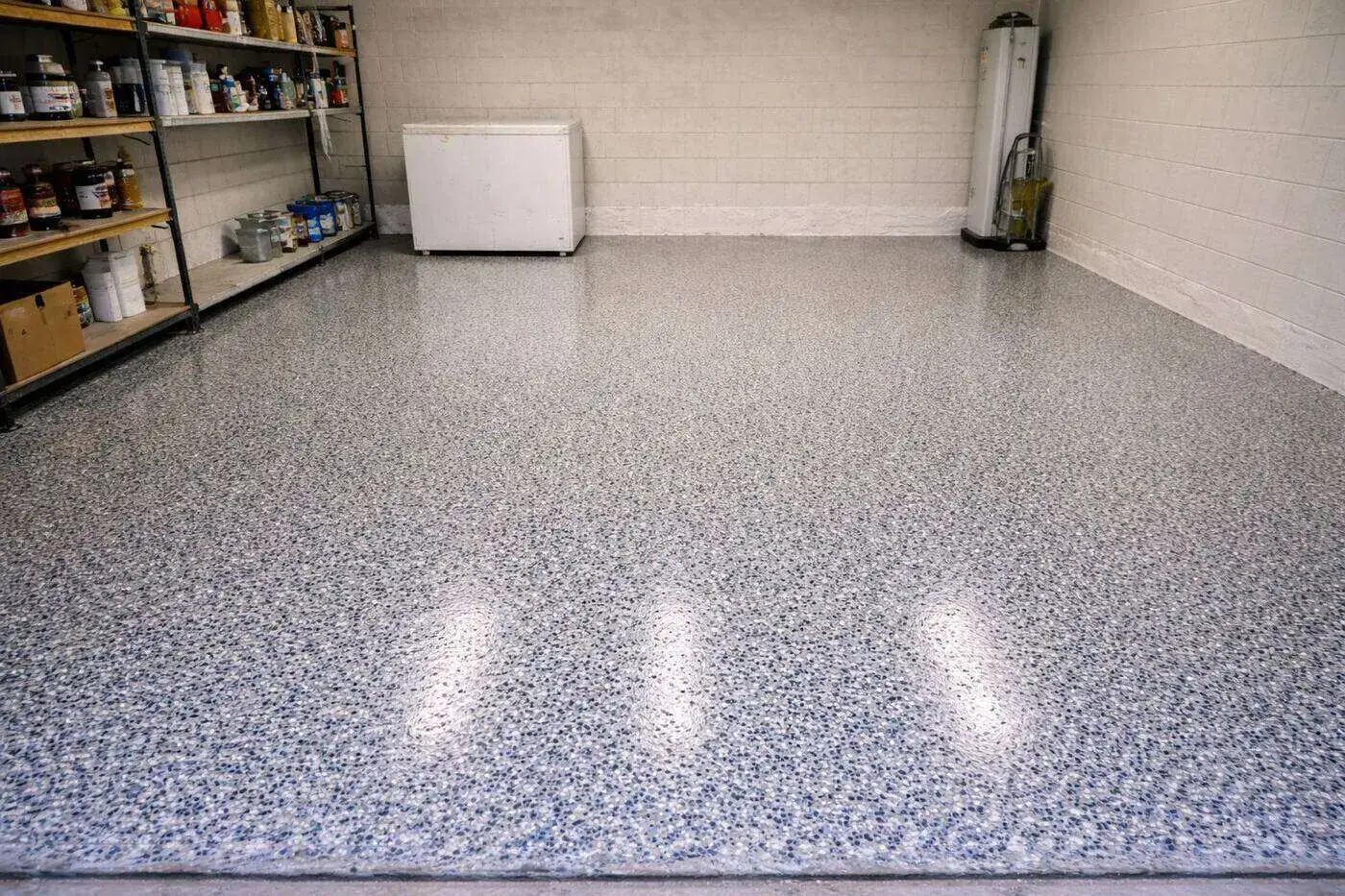
The short answer: yes — with one big condition. A professionally installed epoxy or polyaspartic floor, applied over a properly prepped slab, is genuinely worth it in Pittsburgh because it survives road salt, freeze-thaw cycling, and hot-tire pickup for 10 to 20+ years. But a cheap DIY kit slapped onto a cold, damp Pittsburgh garage slab is not worth it, and it usually fails within 6 months to 2 years. The difference between “best money I spent on the garage” and “peeling mess I have to redo” comes down almost entirely to surface prep, the right product for our climate, and honest expectations.
This article is the honest version — the pros, the real cons, the alternatives, and the specific situations where we'd tell you epoxy is a smart buy versus the situations where we'd tell you to wait or skip it. If you want exact numbers first, our Pittsburgh epoxy flooring cost guide breaks down pricing by system and project type.
What “Worth It” Actually Means
“Worth it” is not just the sticker price. It's cost measured against lifespan, against the hassle of the alternatives, and against what the space is actually for. A floor that costs more up front but lasts four times as long can be the cheaper choice over a decade.
For a typical Pittsburgh 2-car garage (around 450 sq ft), a professionally installed flake-and-polyaspartic system runs roughly $2,400 to $5,400. Spread over a 10-to-20-year life, that's a few hundred dollars a year for a floor you stop thinking about — no resealing, no re-staining, no chipping at the garage door every spring.
A DIY kit, by contrast, costs about $200 to $600 plus your weekend, but in our climate it typically lasts 6 months to 2 years. If you redo it every year or two, the “cheap” option quietly becomes the expensive one — and you do the labor each time. So the real question isn't “is epoxy expensive?” It's “which option costs less per year of a floor I'm actually happy with?”
The Real Pros
Durability built for Western PA
A correctly prepped, salt-rated system handles the abuse Pittsburgh throws at a garage: hot tires that would soften a bargain coating, dropped tools, jack stands, and the constant freeze-thaw cycling that opens cracks in bare concrete. Done right, it lasts 10 to 20+ years.
Salt and chemical resistance
This is the big one here. From November through March, your car drags PennDOT road salt and brine straight into the garage, where it pools and refreezes. A polyaspartic top coat resists that salt and the road chemicals, oil, and antifreeze that eat into raw concrete. Bare or painted slabs absorb it and spall.
Easy to clean
A finished epoxy surface is non-porous, so salt residue, oil drips, and winter slush wipe up with a mop or a hose instead of soaking into the concrete and staining it permanently.
Curb appeal and resale impression
In Pittsburgh's older housing stock, buyers are wary of damp, cracked, or stained garage and basement concrete. A clean, finished floor reads as a maintained, move-in-ready space. We won't promise a specific dollar return — that depends on your neighborhood and the rest of the home — but it absolutely changes how a space shows.
It hides an ugly old slab
A lot of Allegheny County garages have decades-old concrete with stains, patches, and surface pitting. A flake system visually disguises minor imperfections and gives you a uniform, finished look without pouring new concrete.
The Candid Cons
We'd rather you hear these from us than discover them after the fact.
The upfront cost is real
A few thousand dollars is a meaningful spend. If money is tight this month and the floor is purely cosmetic, it's fair to wait. Epoxy is worth it over time, but it's still a real check up front.
It only works with proper prep
This is the single most important caveat. Epoxy does not bond to a smooth, sealed, or dirty slab — it needs diamond grinding to open the concrete's pores. Most failures we're called to fix aren't bad product; they're skipped prep. If a quote doesn't mention grinding and moisture testing, the price isn't a deal, it's a future redo.
It is not a weekend DIY in a Pittsburgh winter
Standard epoxy needs a slab temperature around 50–55°F to cure. Concrete in an unheated detached garage often sits at 35–50°F well into spring, so a winter DIY job simply won't cure right. Winter installs are possible, but they require polyaspartic or polyurea systems and the equipment and experience to apply them in the cold — not a big-box kit.
Slab moisture can disqualify your floor
Much of Allegheny County's older housing stock predates vapor barriers under slabs. Without one, moisture pushes up through the concrete (hydrostatic pressure) and lifts any coating off from underneath. That's why honest prep includes moisture testing — and occasionally we'll find readings high enough that the answer is a moisture-mitigation primer first, or, rarely, “not a good candidate right now.”
Slippery when wet without an additive
A smooth epoxy surface can be slick when wet — relevant in a Pittsburgh garage where snow melts off your car all winter. The fix is simple (an anti-slip aggregate broadcast into the top coat), but if it's skipped, a glossy floor plus meltwater is a real slip risk.
How Epoxy Compares to the Alternatives
Epoxy isn't the only way to deal with a garage or basement slab. Here's an honest comparison of the common options as they hold up in Pittsburgh's salt-and-freeze-thaw conditions.
| Option | Upfront Cost | Lifespan in Pittsburgh | Salt Resistance | DIY-able? |
|---|---|---|---|---|
| Bare / sealed concrete | $0 – $1/sq ft | Slab spalls over time; sealer needs redoing every 1–3 yrs | Poor — salt soaks in and spalls | Yes |
| Garage floor paint | $0.50 – $2/sq ft | 1 – 3 years | Poor — peels at the door first | Yes |
| Interlocking tiles | $2 – $5/sq ft | 5 – 15 yrs; salt & grit collect in seams | Fair — surface ok, water sits underneath | Yes |
| Polyaspartic / epoxy hybrid (pro) | $5 – $12/sq ft | 10 – 20+ years | Excellent — salt-rated top coat | No — needs grinding & fast cure work |
| Polished concrete | $3 – $8/sq ft | 10 – 20+ yrs (needs periodic resealing) | Fair — densified but still porous | No — specialized grinders |
The pattern is consistent: the cheap, DIY-friendly options cost the least up front and resist salt the worst, which is exactly the wrong trade in a Pittsburgh garage. The pro hybrid system costs the most up front and wins decisively on the two things that actually matter here — salt resistance and lifespan. For a deeper dive on the coating chemistry, see our guide to how Pittsburgh's climate affects floor durability.
Pick your size, finish, and color. Get your Pittsburgh price range in 60 seconds.
Open Floor Studio →When Epoxy IS Worth It
From the floors we install around Pittsburgh, Mt. Lebanon, Bethel Park, Cranberry Township, Wexford, Sewickley, Fox Chapel, and Moon Township, these are the situations where professional epoxy is a clear win:
- A 2-car garage you actually use every day. Daily in-and-out, road salt all winter, hot tires — this is exactly what the system is engineered for, and where the cost-per-year math is most favorable.
- You're finishing a basement into living space. A coated, easy-clean, moisture-managed floor turns a damp Western PA basement into a usable room — and metallic finishes look the part.
- You plan to stay in the home. The longer you'll enjoy it, the better the 10-to-20-year lifespan pays off relative to repainting or resealing.
- You want one-and-done. If you're tired of resealing or watching paint peel at the garage door each spring, a pro system is the “do it once” answer.
- Your slab is sound and dry. A structurally solid slab with acceptable moisture readings is an ideal candidate, and prep is straightforward.
Ready to Get Your Pittsburgh Quote?
Every project is different. Call us for a free, no-obligation estimate tailored to your specific space and goals.
When It Is NOT Worth It
We'd rather lose a sale than sell you a floor that won't last. Here's when we'd tell you to hold off:
- You're selling next month on a tight budget. If you're listing the house and watching every dollar, the spend may not come back in your specific market. A deep clean and a quality sealer can be the smarter short-term move.
- Your slab is failing or shows active mine-subsidence cracking. Parts of Allegheny County sit over abandoned coal mines, and a coating cannot bridge a slab that's actively moving. If cracks suggest active movement, address the structure first — a beautiful floor over a moving slab will crack.
- You want a $200 DIY weekend and that's the whole plan. If the goal is the cheapest possible cosmetic refresh and you won't do real prep, a big-box kit will let you down in our climate. Be honest with yourself about what you're actually buying.
- The space is barely used or temporary. A shed you'll tear down, or a slab you plan to replace within a year or two, doesn't justify a premium system.
- Moisture readings are off the charts and won't be mitigated. If the slab is wet and you don't want the moisture-mitigation step, no coating will stick — better to know that before spending.
The Pittsburgh Verdict
So, is epoxy flooring worth it in Pittsburgh? For most homeowners with a daily-use garage or a basement they want to finish, and a sound, dry slab: yes, clearly — as long as it's professionally installed with real diamond-grind prep, moisture testing, and a salt-rated polyaspartic top coat. That's the version that lasts 10 to 20+ years and shrugs off everything a Western PA winter does to it.
What's not worth it is the shortcut version: a cheap kit on an unprepped, cold, damp slab. That's the floor that peels at the garage door by the following spring and turns into a redo. The product gets the blame, but the real culprit is skipped prep and the wrong coating for our climate.
Our honest bottom line: don't ask “is epoxy worth it?” in the abstract. Ask “is this floor, prepped this way, worth it for my slab and how I use the space?” If you want help answering that for your home, we'll assess your concrete and give you a straight recommendation — including telling you if it's not the right time.
Want a straight answer for your space? Call (412) 388-9880 or request your free quote online. We'll look at your slab, test for moisture, and tell you honestly whether epoxy is worth it for your project.
Frequently Asked Questions
Is epoxy flooring worth the cost in Pittsburgh?
For most Pittsburgh homeowners, a professionally installed epoxy or polyaspartic floor is worth it. A typical 2-car garage runs $2,400 to $5,400 for a flake-and-polyaspartic system, and a properly prepped floor lasts 10 to 20+ years. Spread over that lifespan, the cost works out to a few hundred dollars a year for a surface that shrugs off road salt, hot tires, and freeze-thaw. The exception is a cheap DIY kit on a cold, damp slab, which often fails in 6 months to 2 years and is usually not worth it here.
Does epoxy flooring add value to my home?
A clean, professionally coated garage or basement floor improves how a home shows and is a genuine selling point in Pittsburgh's older housing stock, where buyers worry about damp, stained, or cracked concrete. We can't promise a specific dollar-for-dollar return, because that depends on your neighborhood and the rest of the home. What we can say honestly is that a finished floor reads as a maintained, move-in-ready space, while a stained or peeling slab reads as deferred maintenance. Treat it primarily as something you'll enjoy, with curb appeal as a bonus rather than a guaranteed payback.
Is a DIY epoxy kit worth it in a Pittsburgh garage?
Usually not. A big-box DIY kit costs roughly $200 to $600 plus your weekend, but the kits are thin water-based products with no real surface prep, no moisture mitigation, and no salt-rated top coat. In a cold, damp Pittsburgh garage they commonly fail in 6 months to 2 years, peeling first at the garage door where road salt and freeze-thaw hit hardest. If your only goal is a cheap cosmetic refresh on a dry, newer slab you may get a season or two out of it, but as a lasting floor it rarely pays off here.
How long does a professional epoxy floor last in Pittsburgh?
A professionally installed system with diamond-ground prep, moisture testing, and a salt-rated polyaspartic top coat typically lasts 10 to 20+ years in the Pittsburgh climate. Lifespan depends on slab condition, how the space is used, and whether prep was done correctly. The single biggest predictor of a long life is honest surface preparation. A floor coated over a dirty, damp, or unground slab fails early no matter how good the product is.
Will epoxy crack in Pittsburgh winters?
The coating itself does not crack from cold. Pittsburgh's freeze-thaw cycling and road salt are exactly what a salt-rated polyaspartic top coat is built to handle, which is why we use polyaspartic rather than a bargain water-based epoxy. What can crack is the concrete underneath. If the slab moves from settling or active coal-mine subsidence, the coating can telegraph that movement. Stable, settled cracks are repaired with flexible fillers before coating, but a coating cannot bridge a slab that is actively moving.
Is epoxy or polyaspartic the better value in Pittsburgh?
For most Pittsburgh garages the best value is a hybrid system: an epoxy base coat for adhesion and build, finished with a polyaspartic top coat for UV stability, salt resistance, and fast cure. Pure budget epoxy costs less up front but yellows in sunlight and is less salt-tolerant, so it can be a false economy in our climate. Pure polyaspartic throughout costs more. The epoxy-base, polyaspartic-top combination is what we install most often because it balances cost against the durability Pittsburgh actually demands.
Related Articles
How Much Does Epoxy Flooring Cost in Pittsburgh? (2026 Price Guide)
Real pricing ranges by system type, garage size, and the local prep factors that affect cost.
How Pittsburgh's Climate Affects Epoxy Floor Durability
Why freeze-thaw, road salt, and slab moisture decide how long a coating really lasts here.
Why Pittsburgh Epoxy Floors Peel at the Garage Door
The salt-and-freeze-thaw failure pattern that shows up first at the threshold — and how to prevent it.