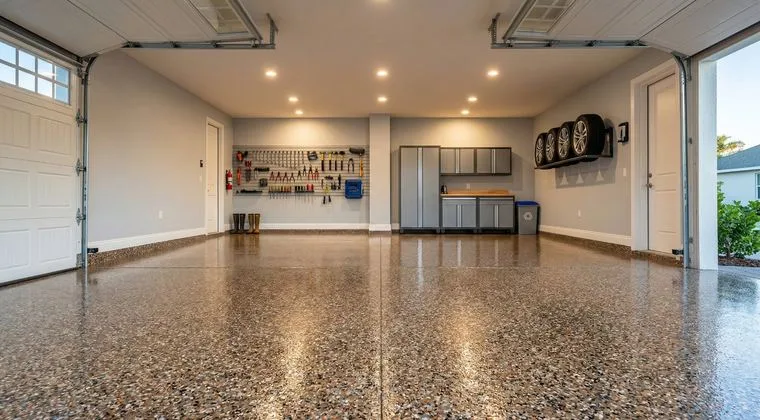
Here is the good news up front: a professionally installed epoxy floor is genuinely low-maintenance. There is no waxing, no buffing, no sealing every season. A quick weekly sweep and an occasional damp mop are enough to keep a quality floor looking new for 15 to 20 years.
The catch is Pittsburgh. Road salt tracked in off your driveway, snowmelt pooling at the garage door, and the fine winter grit that comes with both demand a specific cold-season routine that most people skip. Skip it and the threshold — the busiest, most abused strip of any garage floor — starts to dull and haze years before the rest of the slab. Follow it, and your floor shrugs off every Western PA winter.
This guide walks through the simple routine, the short list of things that will actually hurt your floor, the winter-specific steps that matter most here, and how to handle the stains and wear that come up over a floor's life.
The Simple Weekly & Monthly Routine
Ninety percent of epoxy maintenance is keeping grit off the surface. Loose sand, road grit, and dirt act like sandpaper underfoot and under tires — they are what slowly micro-scratch and dull a gloss finish. Clear them regularly and the coating does the rest.
Weekly: Dust Mop or Soft Broom
Once a week, run a dust mop or soft-bristle push broom over the whole floor to clear grit, dust, leaves, and salt crystals. This is the single most important habit. It takes two minutes and prevents the scratching that no cleaner can undo. For a garage, a quick pass after you pull the cars out on a Saturday is plenty.
Monthly: Damp Mop With a Mild Cleaner
Once or twice a month — or whenever the floor looks dirty — do a damp mop. The method is simple:
- Sweep or dust mop first so you are not dragging grit around.
- Mix a mild, pH-neutral cleaner with warm water per the label dilution. A few drops of a gentle dish soap in a bucket of warm water also works.
- Mop with a soft microfiber mop or flat mop. Microfiber lifts dirt without scratching and leaves no streaks.
- For stuck-on spots, work them with a soft-bristle brush — never a metal or abrasive pad.
- Rinse with clean water if you used a heavier cleaner, then let it air dry or pull a dry microfiber over it.
That is the entire routine. No wax, no polish, no sealer. The topcoat — whether it is an epoxy or a polyaspartic clear coat — is the protective and the decorative layer at once, and adding household waxes on top just creates a slippery, hazy film you will eventually have to strip off.
What NOT to Use on an Epoxy Floor
Most epoxy floors that look tired before their time were not worn out — they were cleaned with the wrong products. The topcoat is tough against impact and chemicals, but its gloss can be dulled by a handful of common household items. Avoid these:
- No acids — including vinegar, citrus cleaners, and lemon. Acidic cleaners slowly etch and break down the topcoat, taking the gloss with them. This is the most common mistake, because vinegar gets recommended for everything else.
- No abrasive pads, scouring pads, or steel wool. They scratch the clear coat permanently. Use a soft cloth, microfiber, or soft-bristle brush instead.
- No harsh degreasers or solvent-heavy cleaners as a routine. Strong industrial degreasers and comet-style scouring powders can dull the finish over time. Save degreasers for actual grease spots, and pick one labeled safe for coated or sealed floors.
- No standing water left to sit for days. A quality floor is water-resistant, but puddles that sit for long stretches — especially salty slush — can work into edges and seams and leave haze. Squeegee or mop standing water rather than letting it dry in place.
- No pressure washer up close at full power. A garden hose or low-pressure rinse is fine; a concentrated pressure-washer tip held close can chip flake or lift edges.
When in doubt, the rule is simple: mild, pH-neutral, and soft tools. Everything a healthy epoxy floor needs is gentle.
Pittsburgh Winter Care: Road Salt & Snowmelt
This is the section that actually separates a floor that lasts in Pittsburgh from one that hazes at the door by year three. PennDOT and Allegheny County salt the roads heavily, and every car drags that salt, slush, and grit straight onto your threshold. A salt-rated polyaspartic topcoat is built to handle it — but only if you do not let it sit.
Rinse Salt & Snowmelt Off the Threshold Weekly
Through the salting season, once a week, mop or hose the threshold and the first several feet inside the garage door with warm water, then go over it with a microfiber mop and a pH-neutral cleaner. The goal is to lift the chloride before it dries into a crust. Dried salt holds moisture against the surface and leaves the white haze you see on neglected garage floors. Rinsing it off weekly is the entire fix.
Neutralize Chloride Before It Sits
If your floor sees especially heavy salt, a pH-neutral cleaner does more than wash — it helps lift the salt residue rather than just smearing it. Do not reach for vinegar to “cut” the salt; that trades a salt problem for an acid problem. Warm water plus a neutral cleaner, applied weekly, keeps chloride from concentrating.
Knock the Grit Off So It Doesn't Scratch
Winter salt comes mixed with sand and fine grit. That grit, ground under tires and boots, is what actually scratches the gloss — not the salt itself. Keep a soft broom by the door and clear the threshold often. A walk-off mat just inside and outside the door catches a surprising amount before it ever reaches the coating.
Manage Hot-Tire Pickup
When you pull a warm car onto a cold floor, the hot tires can grab at a coating — this is “hot-tire pickup,” and it is the classic failure mode of cheap DIY coatings. A professionally installed polyaspartic or epoxy system with proper diamond-grind prep resists it. You can reduce stress further by parking on rubber tire mats or a garage floor mat during the worst of winter, which also catches the salty slush dripping off the wheel wells.
Choose Snow & Ice Melt Carefully
You generally will not need to melt ice on an interior epoxy floor, but slush comes in with the cars. If you treat an adjoining driveway or apron, calcium chloride and magnesium chloride blends are gentler than rock salt, and rinsing any tracked-in residue off the floor weekly matters more than which product you choose. The principle holds: it is sitting salt, not occasional salt, that causes trouble.
Removing Common Stains
A sealed epoxy or polyaspartic floor does not absorb spills the way bare concrete does, so most stains sit on top and lift with a little patience. Speed helps — the sooner you address a spill, the easier it goes. Always start with the gentlest method.
Oil & Grease
- Blot up fresh oil immediately with paper towels or an absorbent rag so it does not spread.
- Clean the area with warm water and a mild, pH-neutral degreaser labeled safe for coated floors.
- Work it gently with a soft-bristle brush, then rinse and dry.
- Repeat once if a shadow remains. Most fresh oil lifts in one or two passes because the coating is non-porous.
Rust
- For surface rust left by a metal object, start with warm water and a soft brush.
- If it persists, use a rust remover that is explicitly labeled safe for coated or sealed floors — many rust removers are acidic and will dull the topcoat, so check the label.
- Rinse thoroughly and dry. Remove the rusting item or set it on a mat to prevent it from coming back.
Paint & Adhesives
- Let small paint drips dry, then gently scrape with a plastic putty knife or an old credit card — never a metal blade.
- For stubborn spots, dampen with warm soapy water to soften the edge before lifting.
- Avoid harsh paint strippers and acetone, which can attack the clear coat. Mechanical lifting with a plastic edge is safest.
Tire Marks & Scuffs
- Most black tire marks and rubber scuffs come up with warm water, a pH-neutral cleaner, and a soft-bristle brush or non-abrasive pad.
- For a stubborn mark, a little extra cleaner and a few minutes of dwell time before scrubbing does the trick.
- Do not reach for steel wool or a wire brush — you will trade a scuff for a scratch.
Ready to Get Your Pittsburgh Quote?
Every project is different. Call us for a free, no-obligation estimate tailored to your specific space and goals.
Protecting Your Floor & When to Recoat
A few small habits keep wear off the floor in the first place, and one planned refresh down the road keeps it looking new for decades.
Everyday Protection
- Felt pads under heavy items. Put felt or rubber pads under tool chests, shelving feet, jack stands, and furniture so they do not scratch or dent the coating when slid.
- Mats at the door. A walk-off mat just inside and outside the garage door catches grit, salt, and water before it reaches the floor — the single highest-value protection in winter.
- A pad under the work zone. If you wrench on cars or weld, lay down a cardboard or rubber mat to catch dropped tools, sparks, and chemicals.
- Lift, don't drag. Drag a steel shelf across the floor and you will gouge it; carry or use a dolly with soft wheels instead.
When a Recoat Is Due
The clear topcoat is a sacrificial layer — it is meant to take the wear so the color and flake underneath stay protected. In Pittsburgh, the garage threshold wears first because that is where salt, grit, and tire traffic all concentrate. A whole-floor recoat is usually a refresh of that sacrificial topcoat rather than a full rebuild.
As a rough guide, a fresh sacrificial topcoat is worth considering roughly every 5 to 8 years, and a threshold-only re-coat can come sooner if your door area takes a beating each winter. The signs to watch for are dulling gloss, light scratching, and thin or worn-looking spots near the door. Catching it early means a clean scuff-and-recoat instead of a more involved repair — a key reason regular cleaning pays off, since a maintained floor recoats easily.
Your Pittsburgh Seasonal Maintenance Schedule
Here is the whole year on one page. None of it is heavy lifting — the winter column is just slightly more attentive because of the salt.
| Season | What to Do |
|---|---|
| Spring | Deep damp-mop to clear the winter's salt residue. Inspect the threshold for dulling or haze. Rinse off any white salt film with warm water and a pH-neutral cleaner. |
| Summer | Easiest season. Weekly sweep, monthly damp mop. Spot-clean oil and tire marks. A good window for a planned recoat, since the floor cures fastest in warm conditions. |
| Fall | Clear leaves and grit before the snow flies. Set walk-off mats at the door and lay down tire/parking mats ahead of salt season. Check felt pads under heavy items. |
| Winter | Rinse the threshold weekly to clear road salt and snowmelt. Sweep grit often. Squeegee standing slush. Keep mats down to catch dripping salt off the cars. |
When to Call a Pro
Routine cleaning is a homeowner job. A few issues, though, mean the coating itself needs professional attention — and catching them early keeps a small fix from becoming a full redo:
- Delamination. If the coating is peeling, flaking up in sheets, or lifting at the edges, that is an adhesion or moisture issue underneath — not something cleaning will fix. It needs to be ground back and re-prepped.
- Blistering or bubbling. Bubbles or blisters usually point to moisture vapor pushing up through the slab, common on older Pittsburgh basements and garages built before vapor barriers were standard. This needs a moisture assessment.
- Deep gouges or chips down to the concrete. Surface scuffs are cosmetic; gouges that expose bare concrete should be patched and sealed before salt and water reach the slab.
- A threshold or whole-floor recoat. When the sacrificial topcoat is worn, recoating needs proper surface prep and the right clear coat to bond — a job for the same diamond-grind process that went into the original install.
If you see any of these, it is worth a look before winter makes it worse. We are happy to assess the floor and tell you honestly whether it is a simple recoat or something that needs more. You can read more on why thresholds fail first in our guide to why Pittsburgh epoxy floors peel at the garage door, and on coating choices in our breakdown of how Pittsburgh's climate affects epoxy durability.
Frequently Asked Questions
How do I clean road salt off my epoxy garage floor?
Rinse the salt off with plain water before it dries into a crust. Mop or hose the threshold and the first few feet inside the door with warm water, then go over it with a microfiber mop and a mild pH-neutral cleaner to lift the chloride residue. Dry the surface afterward so you are not leaving standing water on the coating. In Pittsburgh winters, doing this once a week through the salting season keeps salt from etching the topcoat or leaving white haze.
Can I use vinegar on an epoxy floor?
No. Vinegar, citrus cleaners, and any acidic product slowly dull and break down the epoxy and polyaspartic topcoat. Acids etch the gloss, and repeated use shortens the life of the finish. Stick to a mild, pH-neutral cleaner diluted in warm water. If you want extra cleaning power for a greasy spot, use a degreaser labeled safe for coated or sealed floors rather than reaching for vinegar.
How often should I clean my epoxy floor?
Dust mop or soft-broom it once a week to clear grit, and do a damp microfiber mop with a pH-neutral cleaner once or twice a month, or whenever it looks dirty. In winter, add a weekly rinse of the threshold to clear road salt and snowmelt. Spot-clean spills like oil or paint as soon as they happen. That light routine is all a professionally installed floor needs to stay looking new.
Does winter road salt damage an epoxy floor?
Salt itself will not eat through a quality salt-rated polyaspartic topcoat, but it causes problems when it is left to sit. Dried salt holds moisture against the surface, can leave a white haze, and the fine grit mixed in scratches the gloss as cars and feet grind it in. The fix is simple: rinse salt and snowmelt off the floor before it dries, knock the grit off, and avoid letting slushy puddles stand for days.
How do I remove an oil stain from an epoxy floor?
Blot up fresh oil right away with a paper towel or absorbent rag so it does not spread. Then clean the spot with warm water and a mild pH-neutral degreaser, working it with a soft-bristle brush, and rinse. A sealed epoxy or polyaspartic floor does not absorb oil the way bare concrete does, so most stains lift with one or two passes. Avoid steel wool or abrasive pads, which scratch the finish.
When does an epoxy floor need a recoat?
The wear layer is a sacrificial topcoat, so the area that takes the most abuse usually shows it first. In Pittsburgh that is the garage threshold, where salt, grit, and tire traffic concentrate. Most floors benefit from a fresh sacrificial topcoat roughly every five to eight years, and a threshold-only refresh can come sooner. If you see dulling, light scratching, or thin spots at the door, a recoat restores protection without redoing the whole floor.
Related Articles
Why Pittsburgh Epoxy Floors Peel at the Garage Door
The threshold fails first — here's why road salt and prep shortcuts cause it, and how to prevent it.
How Pittsburgh's Climate Affects Epoxy Floor Durability
Freeze-thaw cycling, road salt, and moisture vapor — what it takes to build a floor that lasts here.
How Much Does Epoxy Flooring Cost in Pittsburgh?
Honest pricing by system type, garage size, and the local prep that affects cost.