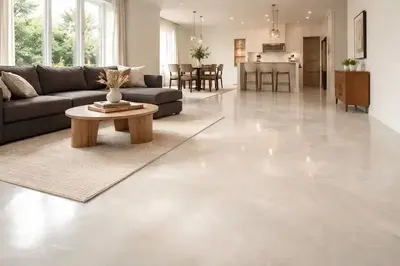
For Allegheny County homes, epoxy is one of the more sustainable concrete-floor options available — it salvages an existing slab instead of replacing it, lasts 10 to 30 years residential and 5 to 20 years commercial, and modern low-VOC and 100%-solids systems eliminate the off-gassing problems associated with older coatings.
If you are weighing flooring options for an older Pittsburgh home — a 1950s ranch in Bethel Park, a turn-of-the-century walkout basement in Mt. Lebanon, or a Cranberry Township new build — the environmental footprint of the choice is worth thinking about. The decision is not really "epoxy vs nothing." It is epoxy versus replacement concrete, ceramic tile over thinset, vinyl plank, polished concrete, or rip-and-replace flooring on a regular cycle. Looked at honestly, a properly specified epoxy coating uses less material, generates less landfill waste, and lasts longer than most of the alternatives.
This guide walks through the sustainability case for epoxy in the Allegheny County context, the low-VOC product systems we install, why long lifespan is the single biggest environmental lever, and a few Pittsburgh-specific considerations — including pre-1970 slab moisture and asbestos floor tile — that any honest contractor needs to address. If you are planning a project, our residential epoxy flooring page covers the in-home applications, and our commercial epoxy flooring page covers the same systems for businesses across the region. To get a quote, call (412) 388-9880.
Why Epoxy Is the More Sustainable Concrete-Floor Option
The sustainability case for any flooring choice comes down to three questions: How much material does it use? How long does it last? What happens at end of life? Epoxy compares favorably across all three when stacked against the realistic alternatives in an Allegheny County home or business.
vs. Slab replacement
Pouring a new concrete slab is one of the most carbon-intensive things a homeowner can do. Cement production alone is responsible for roughly 8% of global CO2 emissions. A garage or basement slab represents thousands of pounds of concrete, plus the demolition waste from removing the old one. An epoxy coating salvages the existing slab. Even with a moisture-mitigation primer, crack repair, and a full polyaspartic top coat, the material footprint is a fraction of a tear-out and pour.
vs. Ceramic tile
Ceramic tile uses thinset mortar, grout, and the tile itself — three different material streams, all manufactured at high temperatures, all bonded permanently to the slab. When tile fails or is replaced, the tile, thinset, and any underlayment go to a landfill. Epoxy is a thin film bonded directly to the slab; if it ever needs to come up, the slab itself is unchanged underneath.
vs. Vinyl plank or sheet vinyl
Vinyl flooring is petroleum-based PVC with a typical residential service life of 10 to 20 years before it dents, scratches, or yellows enough to warrant replacement. Replaced vinyl goes to landfill — it is not currently recycled at any meaningful scale. The epoxy-coated slab can be re-coated in place at the end of its working life, with the original substrate still intact.
vs. Carpet (basements especially)
Carpet in a Pittsburgh basement is a moisture-and-mold problem waiting to happen, particularly on a pre-1970 slab without a vapor barrier underneath. The replacement cycle is fast (typically 7 to 12 years) and the materials are difficult to recycle. An epoxy coating on the same slab eliminates the moisture trap and the replacement cycle simultaneously.
Low-VOC and 100%-Solids Epoxy Systems Available in Pittsburgh
The historical knock on epoxy was solvent off-gassing during cure — the strong chemical smell that can linger in a poorly ventilated space and contribute to indoor-air-quality issues. That problem is largely solved on modern professional systems, and any reputable Pittsburgh installer should be working with two product categories that minimize it.
100%-solids epoxy contains no VOC carrier solvents. The full mass of the resin and hardener crosslinks into the cured film with nothing evaporating off. This is the workhorse of professional residential and commercial installs and is what we use as the base coat on most Pittsburgh projects. Compared to consumer water-thinned or solvent-thinned epoxies sold at big-box stores (which can be 30 to 50% solids), the difference in off-gassing is dramatic.
Low-VOC polyaspartic top coats bring the total VOC content of the system down further. Modern polyaspartic chemistry, originally developed for chloride-exposed bridge decks, is available in low-VOC formulations that are routinely specified for occupied commercial spaces, healthcare environments, and indoor residential applications where air quality matters. Polyaspartic also cures dramatically faster than older urethane top coats, which means the brief off-gassing window is much shorter — most spaces can be safely re-occupied within 24 hours.
For homeowners who want to push further, water-based epoxy systems and ultra-low-VOC primers are also available, particularly useful in finished basements, home gyms, or any space directly attached to the home's HVAC return. These systems sometimes carry a modest premium and slightly different performance characteristics, but they are a real option for sensitive applications.
Long Lifespan = Lower Environmental Footprint
The single biggest sustainability lever in any flooring decision is how often you have to replace it. A properly installed Pittsburgh epoxy floor — diamond-ground prep, moisture-tested slab, salt-rated polyaspartic top coat — has a residential service life of roughly 10 to 30 years and a commercial service life of 5 to 20 years. The wide ranges reflect real-world variables: traffic volume, salt exposure at the threshold, slab condition, and how the floor is maintained.
For comparison, vinyl plank typically needs replacement every 10 to 20 years. Carpet in a Pittsburgh basement, 7 to 12. Ceramic tile lasts long but cracks on a moving slab and is rarely worth saving when something else needs fixing. A 20-year epoxy floor on the same slab spans two replacement cycles for most of those alternatives, and the embodied carbon of the coating itself is far lower than the cumulative footprint of two or three replacement floors.
The maintenance routine that hits the upper end of those service-life ranges is straightforward: weekly threshold rinse during winter to clear PennDOT road salt before it has time to wick into the coating, annual spring inspection of the threshold zone for early signs of chipping, and a simple polyaspartic re-coat of the threshold every 5 to 8 years on garages. None of that involves replacing the underlying coating; it preserves what is already there.
Salvage the Slab, Skip the Tear-Out
We work with low-VOC and 100%-solids systems on Pittsburgh homes and businesses. Free, no-pressure quote.
Salvaging 1950s Allegheny County Slabs Instead of Replacing Them
The sustainability story is especially strong in the Allegheny County housing stock. The median home in the county was built in 1954, and roughly 60 to 70% of housing is pre-1970 — about 36% of homes are pre-1950. That means the typical Pittsburgh slab being coated today was poured 50 to 75 years ago. The concrete is still structurally sound in most cases, but it has visible wear: hairline cracks, surface wear, oil staining, occasional spalling at edges. Without intervention, that slab eventually gets ripped out and replaced when a homeowner remodels — sending the original concrete to landfill.
An epoxy install on a 1950s slab is essentially a salvage operation. We diamond-grind the surface to expose clean concrete, route and fill any active cracks with flexible polyurea joint filler, run an ASTM F2170 in-situ relative humidity test to determine the moisture profile (most pre-1970 slabs were poured without vapor barriers underneath, which matters here), and coat the slab with a primer-base-top-coat system designed for the specific conditions. The end result is a working, durable, decoratively finished floor — built on top of concrete that was already in place.
Roughly 230,000 homes in Allegheny County sit over abandoned coal mine workings (~42,000 of those within the City of Pittsburgh proper). On those sites, slabs occasionally show stress cracks from minor subsidence movement; an epoxy install with proper crack detailing flexes with the slab rather than concealing the underlying issue. That diagnostic moment also matters for the homeowner — we are the eyes that catch the early signs and recommend a structural assessment when warranted.
Pittsburgh-Specific: Asbestos Floor Tile and Black Mastic in Pre-1980s Basements
One Pittsburgh-specific consideration that any honest installer needs to flag: a meaningful share of pre-1980s basements in this region have 9-inch-by-9-inch or 12-inch-by-12-inch vinyl-asbestos floor tile, often laid down in black asphaltic mastic. The tile itself is fine when intact and undisturbed, but it cannot be ground, sanded, or scraped without an EPA-compliant asbestos abatement procedure. Black mastic residue on a slab after old tile has been removed often contains asbestos as well.
This is not something we work around — it is something we test for. If we suspect asbestos-containing material on a Pittsburgh basement slab, we recommend a sample be sent for laboratory analysis before any prep work begins. If positive, abatement happens first, by a licensed abatement contractor, and we coat the slab afterward. We do not grind suspected asbestos-containing material under any circumstances. From a sustainability standpoint, proper abatement and a long-lasting coating still beats the alternative — repeated tile-and-vinyl replacement cycles where contamination just gets resealed and disturbed again later.
If your home was built before 1980 and you are not sure what the basement floor finish actually is, that is the conversation to have with your installer before any quote is finalized.
How a Careful Pittsburgh Install Reduces Waste
Sustainability is not just product selection — it is what the install process itself generates. A few practices that make a real difference on the ground:
- Tight material calculations. Every quote spec is built around a measured slab area, ICRI-defined surface profile, and a known coverage rate per gallon for the specific products. Over-ordering generates leftover resin that has to be disposed of as a hazardous-waste class material; under-ordering creates patch lines and wasted labor. Calculating tightly up front avoids both.
- Leftover-flake reuse. Decorative vinyl flake almost always has unused material left at the end of a job — broadcast intentionally heavy so the floor takes a saturated color. Collected and stored by color blend, the unused flake can go into later jobs in the same blend instead of the bin.
- HEPA-vacuum dust capture. Diamond grinding generates concrete dust. We run HEPA-equipped vacuums tied directly to the grinders and capture the dust in sealed containers rather than letting it become airborne or settle into the soil around the property.
- Reusable equipment. Grinder pads, mixing buckets, rollers with reusable cores, and dispensing tools are cleaned and re-used job to job. Single-use plastic on a typical job is limited to the resin pails themselves (which are recyclable when fully cured), spike rollers, and protective sheeting.
- Honest "this slab is fine" advice. Sometimes the most sustainable answer is "your existing floor still has years of life — let us re-coat the threshold and move on." Spec'ing unnecessary work to grow a quote is bad for the homeowner and bad for the environmental footprint.
Frequently Asked Questions
Is epoxy flooring environmentally friendly?
It can be the more sustainable choice when you compare it to ripping out and replacing a concrete floor. Low-VOC and 100%-solids epoxy systems emit very little once cured, and a single coating that lasts 10 to 30 years avoids the repeated material and disposal cycle of paint or tile. The biggest environmental win is that epoxy salvages an existing slab instead of sending it to a landfill and pouring new concrete.
What are low-VOC and 100%-solids epoxy systems?
VOCs are the volatile organic compounds that off-gas from many coatings. A 100%-solids epoxy contains essentially no solvent to evaporate, so it cures with minimal emissions, and low-VOC top coats further limit what is released during install. These systems are widely available in Pittsburgh and are what we spec for occupied homes and basements where air quality during and after the job matters.
Can a 1950s Allegheny County slab be salvaged instead of replaced?
Usually, yes. Most mid-century Allegheny County slabs are structurally sound even when they look stained or cracked. We moisture test, repair cracks with flexible polyurea fillers, diamond grind the surface, and coat over the existing concrete. That avoids the cost, disruption, and carbon footprint of demolition and a new pour, which is both the greener and the more economical path in the vast majority of older homes here.
Is there asbestos risk in older Pittsburgh basement floors?
Pre-1980s basements can have asbestos floor tile or black mastic adhesive under later flooring. Those materials are only a hazard when disturbed. We do not grind or sand suspect tile; where it is present, the safe path is encapsulation by a licensed abatement professional or removal before any coating work. We flag anything suspicious during the assessment rather than cutting into it.
How long does an eco-friendly epoxy floor last?
A professionally installed low-VOC system lasts 10 to 30 years for residential use. That long service life is itself the sustainability story: a floor you coat once and keep for two or three decades has a far lower lifetime footprint than paint that fails in a couple of years or tile that gets torn out and replaced. Designing the system around Pittsburgh's salt and freeze-thaw conditions is what gets you to the top of that range.
How do you reduce waste on a Pittsburgh epoxy job?
We calculate material tightly to a measured slab area so we do not over-order resin that becomes hazardous waste, collect and reuse leftover decorative flake by color blend across jobs, capture grinding dust with HEPA-equipped vacuums into sealed containers, and reuse grinders, buckets, and tooling job to job. We also give honest advice when an existing floor still has years of life and only needs a threshold re-coat rather than a full redo.
Get a Free Pittsburgh Eco-Friendly Epoxy Quote
If you are planning a project anywhere in Allegheny County or the surrounding region — Mt. Lebanon, Sewickley, Fox Chapel, Wexford, Cranberry Township, Bethel Park, Upper St. Clair, Peters Township, Squirrel Hill, or out into Westmoreland, Washington, Butler, or Beaver counties — we are happy to walk the slab, run the moisture test, flag any pre-1980s tile concerns, and write a quote built around the most appropriate low-VOC system for your space.
Call (412) 388-9880 or request a free quote to get started. For more on how Pittsburgh's climate shapes long-term durability, see our companion guide on how Pittsburgh's climate affects epoxy floor durability; for the most common local failure mode, our piece on why Pittsburgh epoxy floors peel at the garage door is worth a read before you sign any contract.
Related Articles
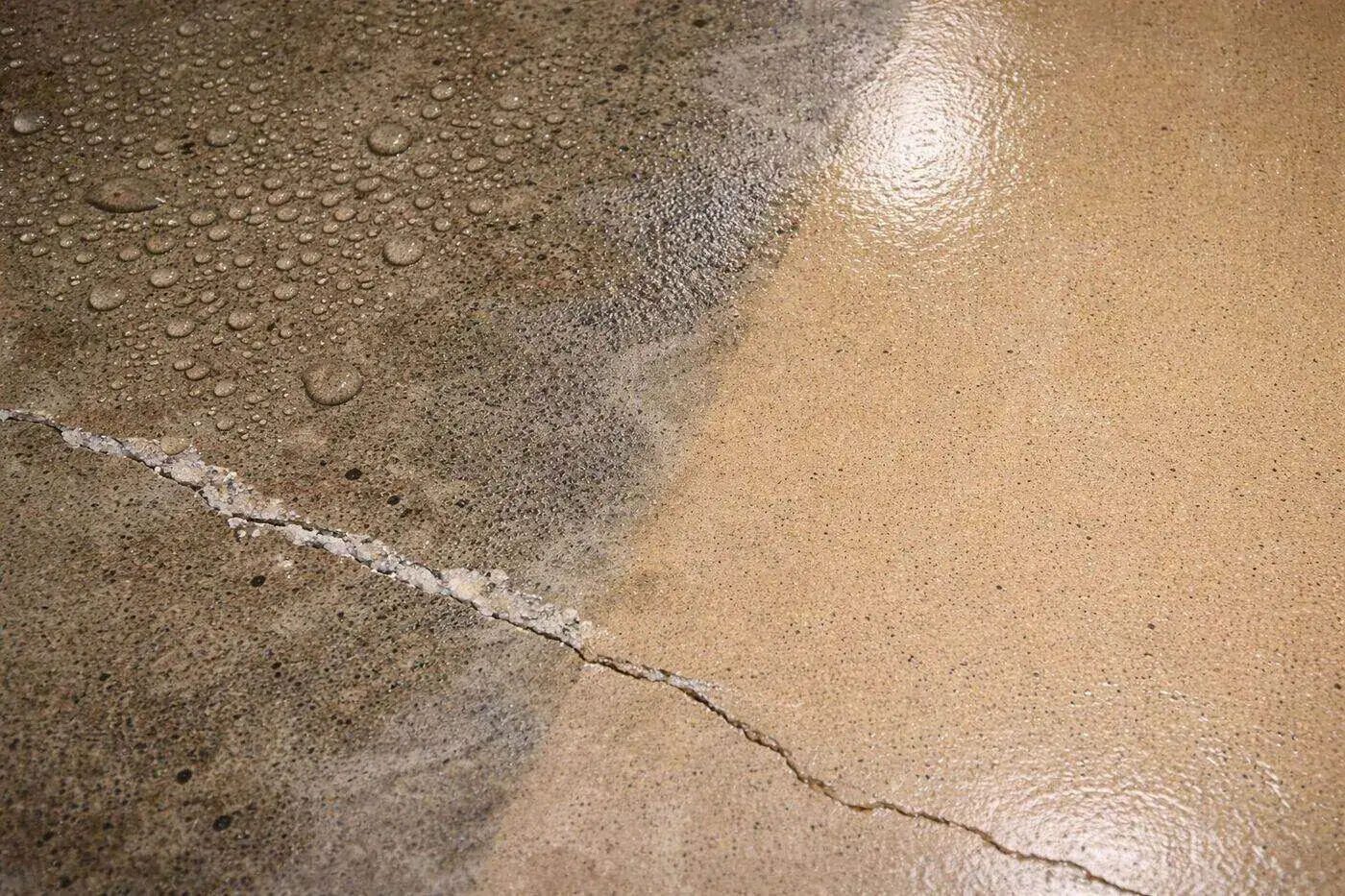
How Pittsburgh's Climate Affects Epoxy Floor Durability
PennDOT salt, freeze-thaw cycles, and pre-1970 slab moisture — and what 20-year performance actually requires.
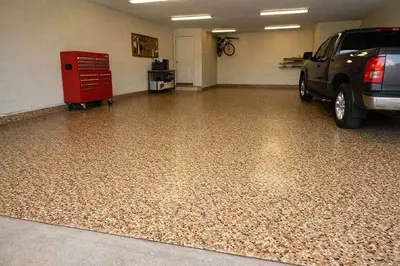
Why Pittsburgh Epoxy Floors Peel at the Garage Door
The 6-18 month threshold failure pattern, the three root causes, and how to spot them on a quote.