Residential Epoxy Flooring Pittsburgh Built to Beat Freeze-Thaw & Winter Road Salt.
Western PA winters are brutal on a home floor. The freeze-thaw cycle works cracks open in older slabs, and the brine you track in off salted streets eats away at bargain coatings. Kody and the crew prep and seal for exactly those conditions — detached-garage slabs, fieldstone-walled basements, three-season sunrooms, and the living spaces in between.
A Home Floor Engineered for Western PA Winters
Three things define what a residential floor goes through in Pittsburgh, and all three are seasonal. First, the freeze-thaw swing: our concrete crosses 32°F dozens of times between November and March, and every cycle pries a little wider at any crack or cold joint already in the slab. Second, road salt — the city and PennDOT keep the hills passable with brine and rock salt, and your tires, boots, and dog's paws carry that corrosive slurry straight into the garage and mudroom. Third, the housing stock itself: much of the South Hills, Bloomfield, Lawrenceville, and the older boroughs along the rivers was built generations ago, on basement slabs and detached-garage pads that predate modern vapor barriers. A floor coating here has to answer all three, not just look good in a brochure.
That is the floor Kody builds. The system we install is a high-build epoxy locked under a salt-rated polyaspartic top coat — the polyaspartic is what shrugs off chloride from winter brine and stays flexible enough not to fracture when the slab expands and contracts. On the garage and basement floors that take the worst of it, that top coat is the difference between a surface you re-do in three winters and one that is still tight in twenty.
Because so many Pittsburgh basements sit below the water table on a hillside lot, moisture is the quiet killer of cheap coatings. Hydrostatic pressure pushes vapor up through an un-sealed older slab, and that vapor delaminates anything that was rolled on without testing first. So we do not start with the grinder — we start with the moisture meter. Every basement and garage slab gets ASTM F2170 in-situ relative-humidity probes and an F1869 calcium-chloride read before we commit to a primer. Older fieldstone-foundation basements and detached garages on the steeper lots tend to read high, and when they do, a vapor-mitigation primer goes down before anything else.
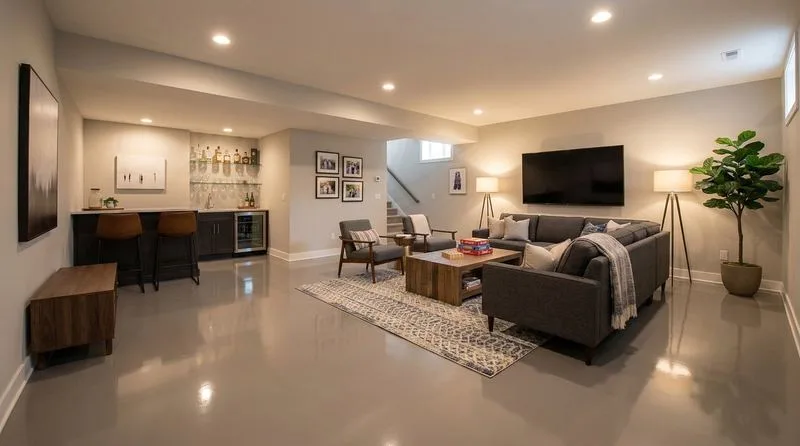
From there it is a clean, design-forward floor for the rest of the house: a metallic pour that catches the light in a finished basement, a flake system in the mudroom that hides road grit between cleanings, a solid color in the laundry, or a sealed surface for a covered back porch or three-season sunroom. The attached or detached garage floor usually gets done in the same visit since it sees the most salt and the most abuse. For what a project runs by room and finish, see our Pittsburgh epoxy cost guide, or read why so many local floors peel at the garage door first.
Get a Free Quote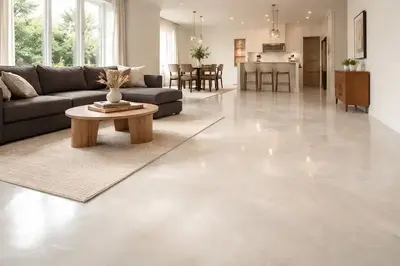
What a Pittsburgh Home Floor Actually Has to Survive
Salt, freeze-thaw, basement damp, and decades-old concrete — here is how epoxy answers each one.
Salt
Brushes Off Winter Brine
The chloride slurry that drips off your car all winter rusts rebar and pits raw concrete. A salt-rated polyaspartic top coat gives it nowhere to soak in — you sweep the grit out in spring and the slab underneath is untouched.
−5°F
Holds Through Freeze-Thaw
Our concrete crosses freezing dozens of times a winter, flexing the slab and prying at every joint. The polyaspartic layer stays flexible in the cold instead of going brittle, so it moves with the slab rather than cracking off it.
Dry
Seals an Older Basement
Hillside lots push groundwater against the foundation, and a bare basement slab wicks that damp upward into musty air and mold. A moisture-mitigated epoxy caps the slab in one seamless, scrubbable surface — no grout lines for mildew to live in.
5 min
Mud-Season Cleanup
Between the salt of February and the mud of an April thaw, a mudroom or entry floor takes a beating. Grit and slush sit on top of the coating, not in it — a damp mop pulls it all up, no waxing, sealing, or special products.
Resale
Finishes the Basement
In Pittsburgh's older housing stock, a clean, dry, finished basement floor is what turns square footage buyers discount into livable space they pay for. A sealed lower level shows far better than the stained, dusty concrete most listings still have.
See full pricing guide →20+ yrs
Outlasts the Alternatives Here
Basement carpet traps the damp and the salt smell; laminate buckles on a cold, moist slab; tile grout cracks with every freeze-thaw. A properly prepped epoxy floor does none of that — it holds for 20+ years through the same winters that ruin the rest.
Why floors peel at the garage door →How Kody Approaches a Pittsburgh Slab
Five steps, all of them built around the two things that wreck floors here — an older slab's hidden moisture and the freeze-thaw movement underneath it.
Free Consultation
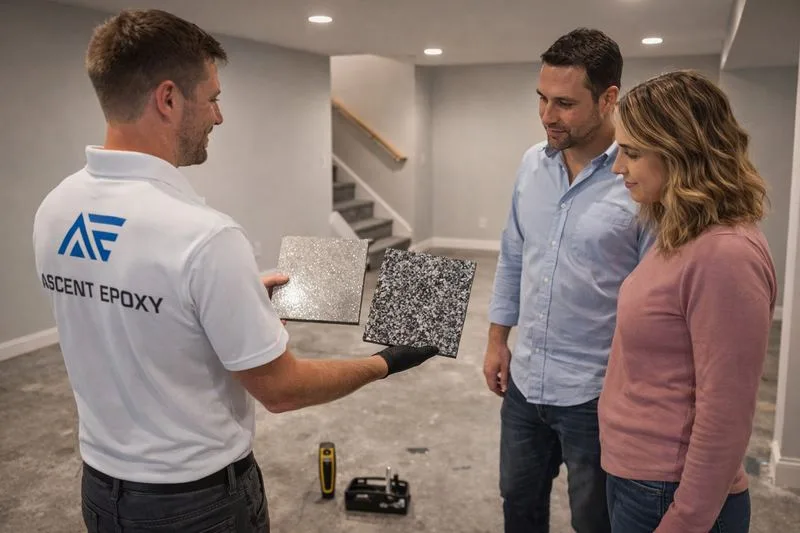
~45 minKody walks the basement, garage, or room with you, reads the slab for its age and cracking, talks through finishes, and leaves a written quote with no hidden fees. Schedule yours free.
Surface Preparation
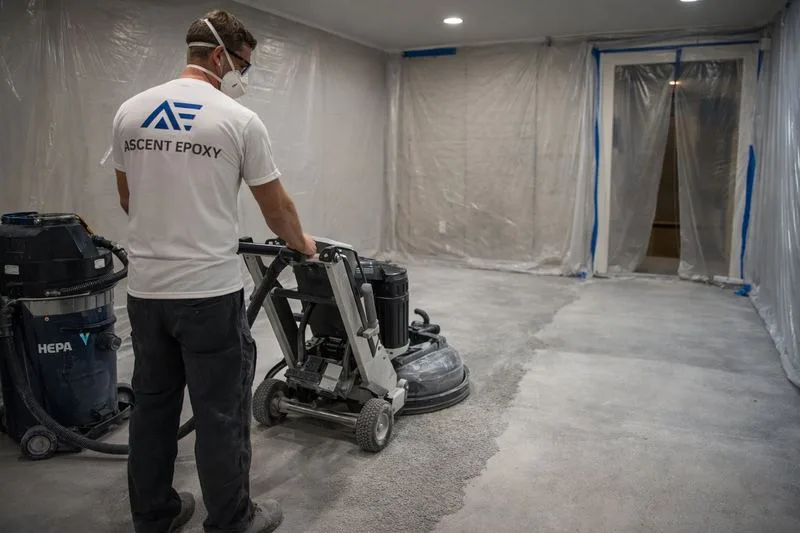
2–4 hrsFirst the moisture probes — older Pittsburgh slabs and below-grade basements read high, and that tells us whether a vapor primer is needed. Then diamond grinding opens the concrete (slag-aggregate mixes common here grind harder than limestone, so we set the heads accordingly).
Crack Repair
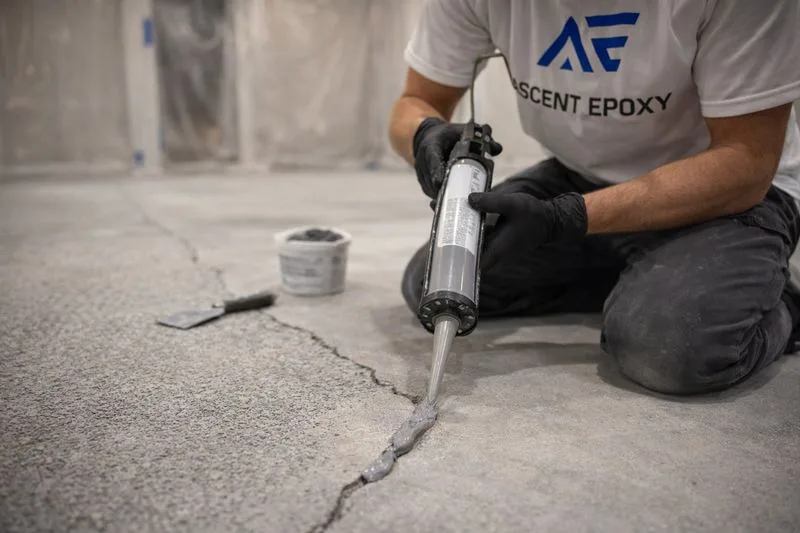
30–60 minYears of freeze-thaw leave their mark — we chase out the cracks, fill spalls and divots with flexible polyurea, and treat the control joints so they can still move without telegraphing through the new floor.
Multi-Coat Application
3–5 hrsWe lay down primer, the color or flake body coat, and a salt-rated polyaspartic top coat. In an unheated garage or a cool basement we hold the slab above its dew point so each layer bonds — rushing the cure in cold air is exactly how the cheap jobs fail.
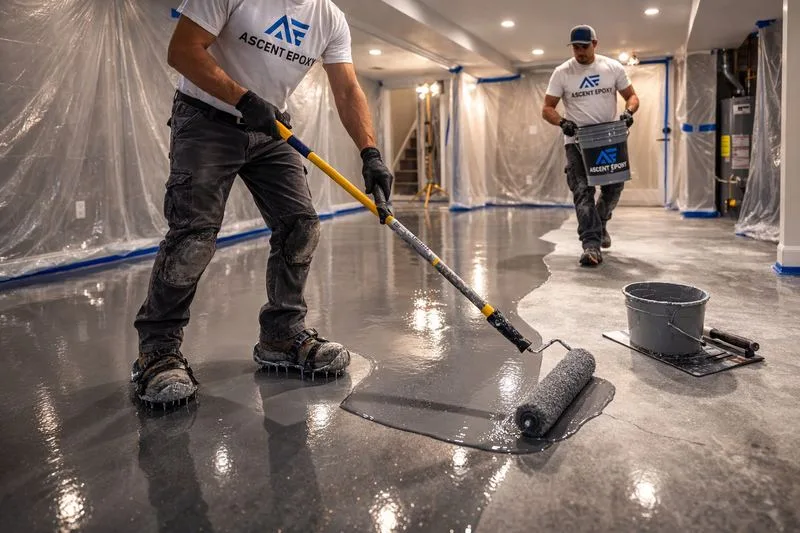
Cure & Enjoy
24–72 hrsThe floor cures over 24-72 hours — longer in cold-weather installs, which we plan around. You get a simple care sheet (and the one rule that matters here: knock the worst of the road salt off before it dries on) plus a written warranty with no fine print.
Ready to Start? Step 1 Is Free.
Schedule your no-obligation consultation and see finish samples in your space.
Finishes That Fit a Pittsburgh Home
From a showpiece finished basement to a hard-working mudroom — five systems, each topped with the same salt-rated polyaspartic.
Why This Floor Lasts Through Twenty Pittsburgh Winters
Six reasons an epoxy-plus-polyaspartic system outlives the salt, the cold, and the damp instead of failing the way bargain coatings do.
Chloride / Salt Resistant
Winter brine is the thing that quietly destroys floors here. The polyaspartic top layer is chemically resistant to road salt, so the chloride sits on the surface and washes away instead of pitting the slab and rusting whatever steel is in it.
Freeze-Thaw Crack Bridging
When the slab expands and contracts with every freeze, a brittle coating snaps at the joints. Our flexible polyurea crack repair and elastomeric top coat move with the concrete, bridging the hairlines instead of fracturing over them.
Stain & Spill Proof
Oil drips off a snowblower, de-icer, paint, a knocked-over can of stain in the basement — the seamless surface gives none of it anywhere to soak in. Wipe it up and the floor underneath is untouched.
Tougher Than Slag Concrete
Dropped tools, a snow shovel dragged across it, the steel wheels of a loaded dolly — the high-strength resin takes the impact and abrasion that would chip and dust raw concrete, including the harder slag-aggregate slabs common in older Pittsburgh homes.
Beats Basement Hydrostatic Pressure
On a hillside lot, groundwater pushes vapor up through the basement slab — the exact force that floats a poorly bonded coating loose. Installed over a tested, vapor-mitigated slab, the system stays anchored. The ASTM moisture read is non-negotiable on every basement we do.
No Off-Season Upkeep
No annual re-sealing, no spring re-coat. After the salt and slush of winter, a push broom and a damp mop reset the whole floor — no grout lines, no porous concrete, nothing to maintain through the rest of the year.
The Detailed Install, Step by Step
What actually happens on a Pittsburgh job — the testing, the prep, and the cold-weather discipline that separates a 20-year floor from a 3-year one.
Free on-site consultation & estimate
Kody measures the space and reads the slab in person — how old it is, where it has cracked, how the basement smells, whether the garage is attached or a detached pad. From that you get one transparent written estimate, no surprise charges once the work starts.
Moisture testing & surface preparation
ASTM F1869 calcium-chloride and F2170 in-situ humidity probes go down first — older below-grade slabs routinely read too high to coat blind. Then diamond grinding (heavier passes on hard slag-aggregate concrete), flexible-polyurea crack and joint repair, and a vapor-mitigation primer wherever the meter says it is needed.
Base coat installation
High-solids 100% epoxy goes onto the prepped concrete, with your color, flake, or metallic media set during this pass. The slab is held above its dew point the whole time — in an unheated garage or cool basement that means active temperature control, because a base coat chilled below dew point during cure is a base coat that fails by spring.
Polyaspartic top coat
The salt-rated, UV-stable polyaspartic clear coat — the layer that actually fights Pittsburgh. It shrugs off winter chloride, stays flexible through the freeze-thaw swing, and takes the daily wear. This single coat is the difference between a floor that survives twenty winters and one that does not.
Final inspection & written warranty
We walk the finished floor with you and hand over a written warranty with no fine print. Light foot traffic in about 24 hours; in a cold-weather install we extend the cure window and tell you exactly when you can park or move heavy items back — usually 5–7 days, longer when temperatures are low.
Pittsburgh Basements, Garages & Living Spaces
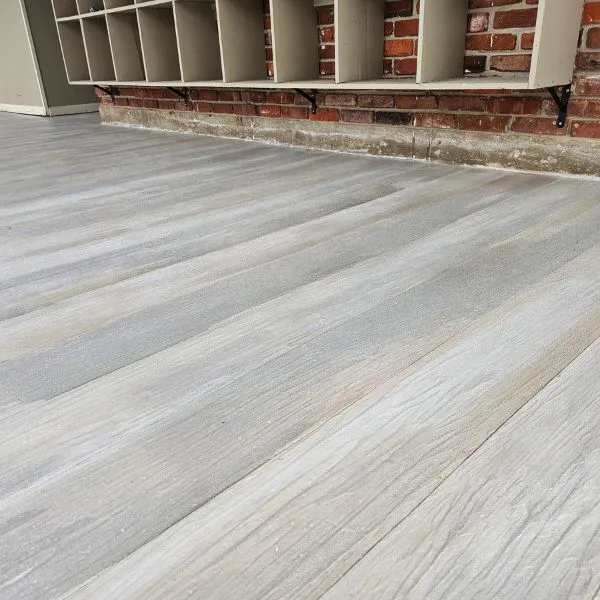
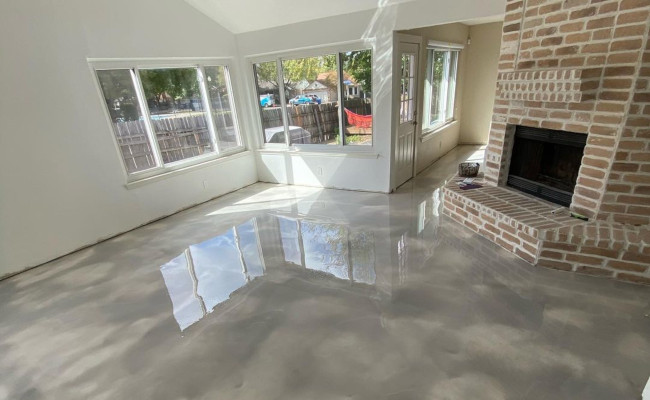
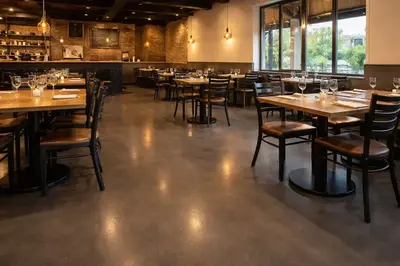
Finished floors from real homes around the city — basement, garage, and interior installs, not stock photos.
Rated 5.0★ — Pittsburgh Reviews
Real reviews from real Pittsburgh homeowners — verified on Google.
"We had Epoxy Floor Pittsburgh redo our basement and garage last winter—night and day difference. The team was on time, friendly, and super detail-oriented. The metallic epoxy finish in the basement looks incredible under the lights, and the garage floor feels indestructible. Couldn't be happier with how it turned out."
"Got my garage done this spring—smooth surface, no peeling, and it still looks brand new after months of use."
"Great local company. They helped us pick the right color flakes and the floor came out better than we imagined."
Residential Epoxy FAQs — Pittsburgh
Common questions from Pittsburgh homeowners about residential epoxy flooring.
Residential epoxy flooring in Pittsburgh typically costs between $6 and $12 per square foot installed, depending on the finish and condition of your slab. Metallic epoxy finishes run higher than solid-color systems. Factors like crack repairs, moisture mitigation, and room size also affect your final price. Contact us at (412) 388-9880 for a free, no-obligation quote tailored to your home.
Epoxy flooring is an excellent choice for Pittsburgh kitchens. It creates a seamless, waterproof surface that resists stains from cooking oils, wine, and food spills. Unlike tile, there are no grout lines where mold can grow in Pennsylvania's humid environment. Epoxy is also easy to clean and available in decorative finishes that complement any kitchen design.
In most cases, existing flooring materials like tile or vinyl must be removed before epoxy application to ensure proper adhesion. We grind the concrete substrate and perform moisture testing, which is critical in Pennsylvania where slab-on-grade foundations are common. Our team evaluates your existing floor during the free consultation and recommends the best preparation approach. Call (412) 388-9880 to schedule yours.
A professionally installed residential epoxy floor typically lasts 20 years or more with proper care. Longevity depends on the quality of surface preparation, the coating system used, and how the floor is maintained. In Pittsburgh, our climate-tested installation process accounts for humidity and slab moisture to prevent premature peeling or delamination.
Epoxy can be successfully applied to previously flooded slabs, but thorough evaluation is essential. We perform calcium chloride moisture testing and inspect for damage from past basement moisture or weather events. If moisture levels are elevated, we apply a moisture mitigation system before coating. Many Pittsburgh homes with water damage have been successfully resurfaced with epoxy. Call (412) 388-9880 for a free slab assessment.
Design your residential epoxy floor in 60 seconds.
Pick your size, finish, and color. See a real preview and your Pittsburgh price range before you call.
Open Floor Studio →